
01
People with complex speech needs
ALS, aphasia, ICU, post-stroke, apraxia — anyone who can still blink or move their head.
ThinkVoice turns intentional signals into natural conversation—across your headset, phone, and watch.
App
From a passing idea to a meaningful exchange.
Sense → choose → speak
Full Grok conversations with Apple Health and live metrics as context. If speaking is hard, a sensing device or the front camera turns a blink, nod, or head shake into a spoken reply in your voice.
Join early access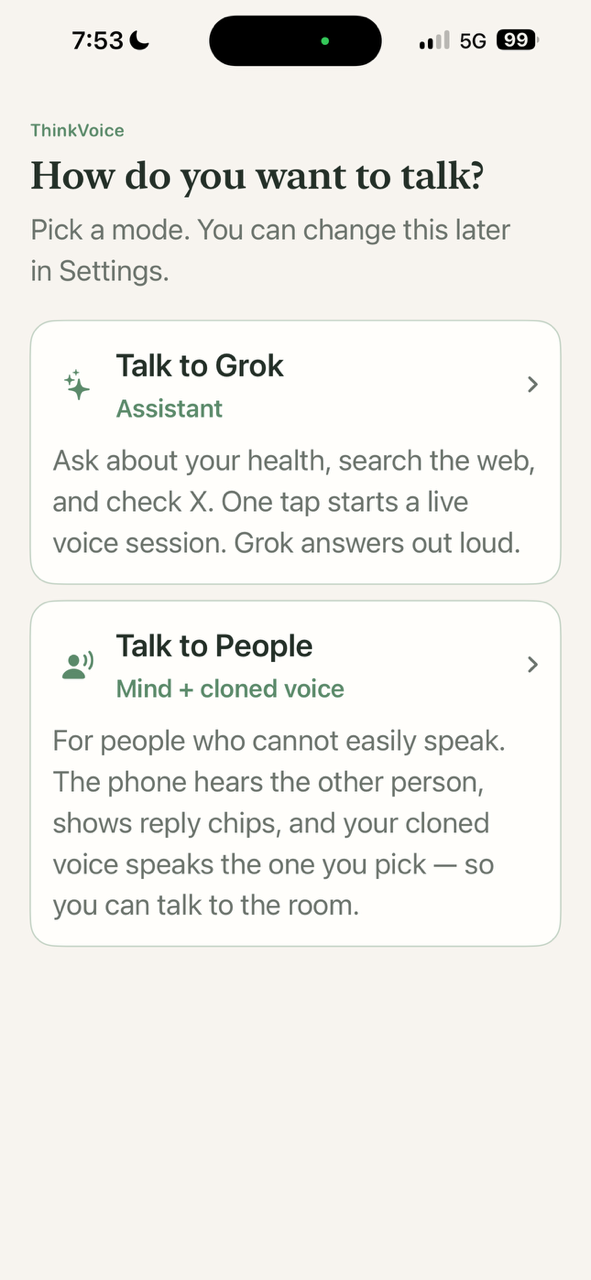
Who it’s for
Quiet software for hard moments — and for everyday Grok on a wrist.
ALS, aphasia, ICU, post-stroke, apraxia — anyone who can still blink or move their head.
The phone hears the room, shows reply options, and speaks the chosen line out loud.
One tap, live voice, health and location in context. Quiet enough for a plane.
Two ways to talk
Same product loop. Different rooms.
Ask about your health, search the web, check X. One tap starts a live voice session. Grok answers out loud. Tap to talk or hold to talk. Works on iPhone and Apple Watch.
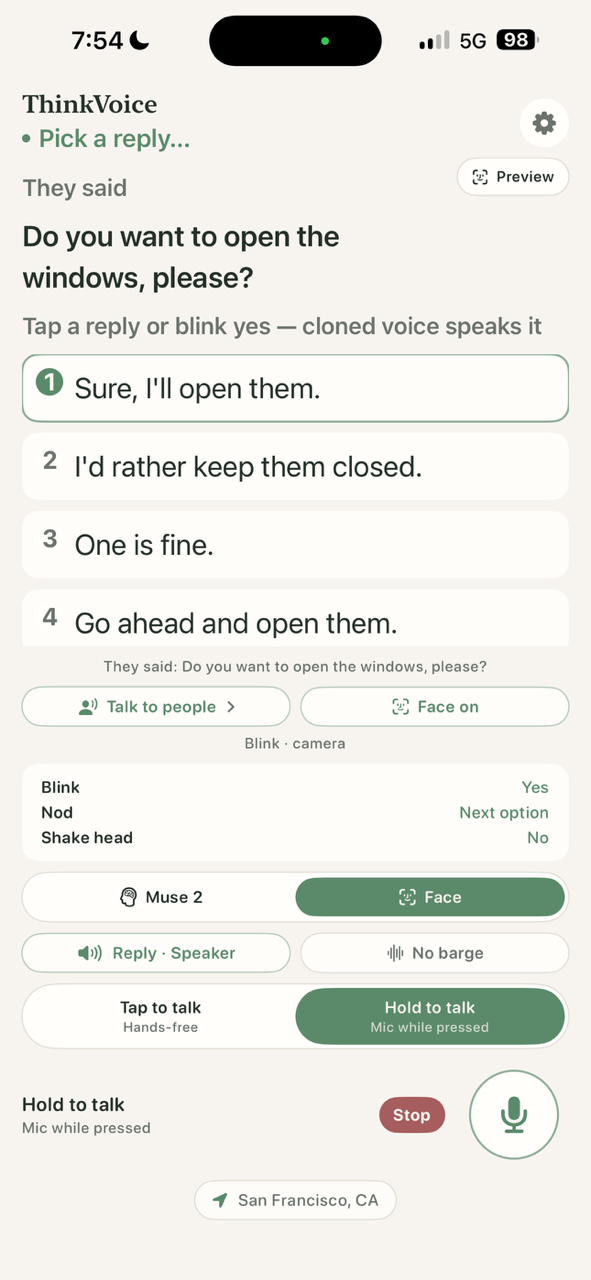
Built for moments when speech is hard. The phone hears the other person, shows reply chips, and a cloned voice speaks the line you pick — so you can talk to the room.
What ships today
Invite-only TestFlight. No public App Store listing yet.
Live Grok Voice (xAI realtime) on iPhone and Apple Watch
Tap to talk or hold to talk
Talk to people with reply chips + cloned TTS
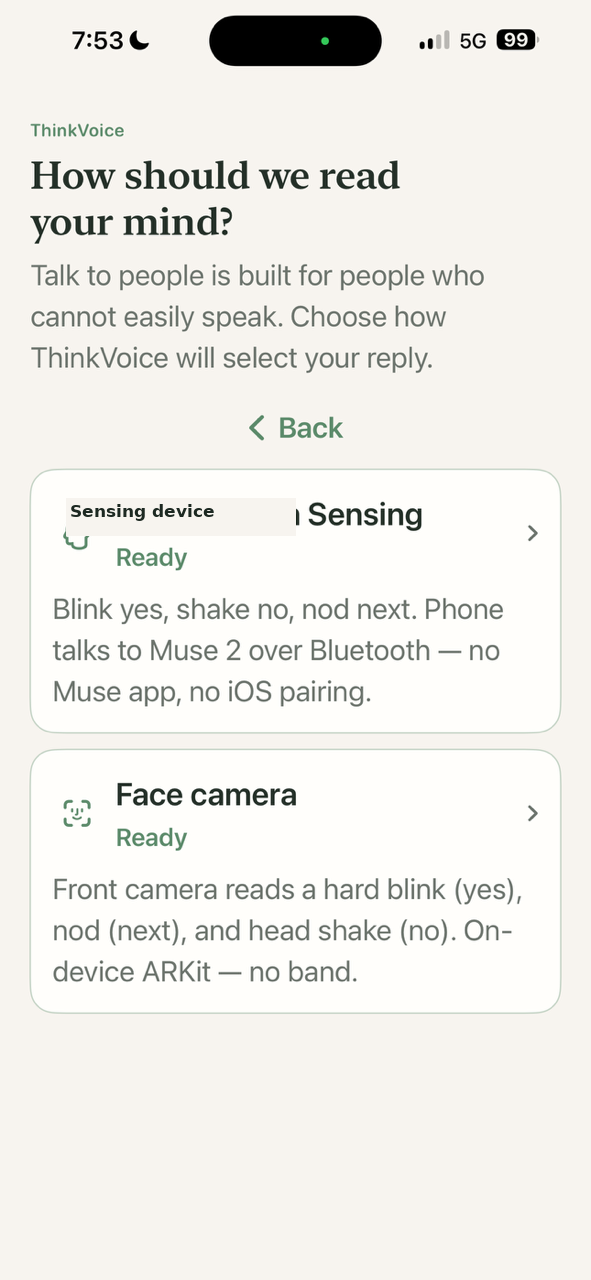
Sensing device blink / nod / shake
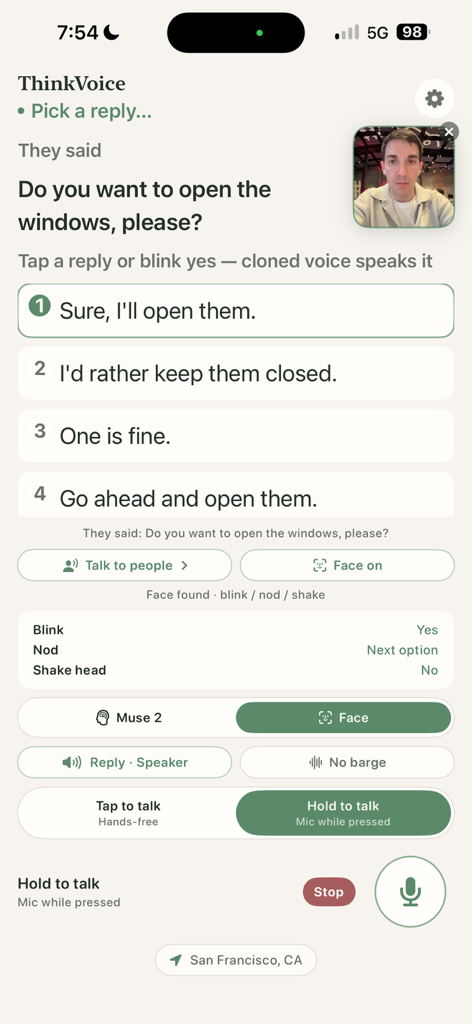
Front-camera blink / nod / shake (ARKit, on-device)
Permissioned Apple Health, location, calendar, reminders
How it works
Watch the demo, then the three steps. A sensing device is optional — gesture math stays on the phone.
Grokathon demo — blink, nod, or shake to pick a reply. Cloned voice speaks it.
Grok listens to you, or to the person in front of you.
Tap a chip, or blink / nod / shake with a sensing device or the camera.
Grok answers, or your cloned voice says the line to the room.
All gesture math stays on the phone. A sensing device is optional.
Stories
Families, caregivers, and clinicians — early voices from the waitlist.
I'm a parent building with the Grok stack because my son has childhood apraxia of speech. Standard AAC helps, but it's still slow and high-friction for real conversation. I got deep into Grok, Grok CLI, GrokTerm, and OpenClaw (Grok-powered agent) specifically to prototype an AI-assisted AAC path — including Grok Build for the boards/integration side. Dan's ThinkVoice direction matters: low-motor intent (face/head sensing) plus fast Grok Voice is exactly the kind of interface kids like mine need. If sensing + voice can cut the effort of “getting words out,” that's life-changing for families dealing with apraxia and complex communication needs.
I need this for my father who lost speech due to a stroke!!
In the ICU we spend so much energy trying to guess what someone is asking for. A phone that hears the room, offers reply chips, and speaks the choice out loud — with a blink or nod — would change how we care for patients who still know exactly what they want to say.
About
Apple Watch
Status, talk / stop, crown volume, short transcript. The phone is the hub for sensing device and camera. Sign-in syncs from iPhone.
Privacy
Microphone, camera, Bluetooth, location, and Health are requested only when a feature needs them. Face tracking runs on-device with ARKit. A sensing device never requires a third-party account. xAI auth stays in the Keychain. ThinkVoice does not invent faces of real people.
FAQ
ThinkVoice is invite-only. Fill out the form and we’ll send a TestFlight link when ready.
Join early access